
7 September 2026
Are you prioritising your psychological safety?
“When you work for an employer, does that mean you have to give…

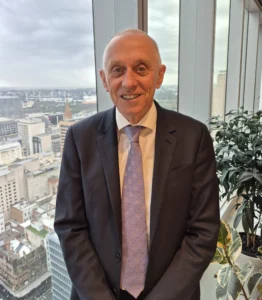 Acknowledging you don’t hold major career ambitions isn’t something you hear often from someone who spent their working life in a large bank’s head office.
But approaching 50 years of working at NAB and now nearing retirement, FSU member Alan Williams is happy to admit he only ever wanted a job that gave him the sort of life he desired outside of work.
“I've never been overly ambitious career wise,” Alan admitted.
“When I left school in 1976, all I wanted to do was get a job to earn money so I could do what I wanted to do outside of work.
“I'm a railway enthusiast, so I just wanted to go on train trips and take photos.”
Alan’s first job at the Commercial Banking Company (CBC), which was one of NAB’s two predecessors, was as a junior Batch Clerk working in the Kew branch in Melbourne.
“In those days, the only job requirement was to pass a medical examination,” Alan explained.
“As a junior, you did all sorts of odd jobs – from balancing the batches, processing inward dishonoured cheques, managing the postages, and taking and purchasing everyone’s morning tea orders.”
For 22 years, Alan worked in various NAB branches, including in regional Victoria, eventually working his way up to Branch Manager.
After a restructure in 1998, Alan put his hand up for a role in Head Office. Eventually, he found his way into a temporary role assisting the Pricing Implementation Manager processing interest rate changes.
“That included interest rates for business lending, deposits, home loans, personal loans... all the rates that are on the two main ledger systems at NAB.
“So after 22 years, I had my second job interview! I’ve been in this role for the past 27 years.”
It’s a job Alan said isn’t for everyone. But it suits his personality just fine, which he describes as “a bit pedantic”, “thorough” and “careful”.
“It’s the sort of role not many people would like doing because it’s repetitive and process-driven. You’ve got to be one hundred per cent accurate because if you input the wrong rate, you’re going to impact thousands of customers and possibly cost the bank lots of money.”
Fortunately, Alan got his wish of obtaining a career that did indeed give him everything he wanted from life.
“I got married, we had six kids, we bought a house, and now I’ve got 12 grandchildren with another one on the way!”



However, it wasn’t all smooth sailing for Alan. During a time when it was illegal to be gay, Alan supressed his true feelings and instead followed societal expectations.
“But after 18 years of faithful marriage – and with changing societal expectations, not to mention the law changing – I came out to my wife and that was the end of our marriage. Despite the sadness and trauma at the time, we remain friends and the whole family remains close and strong.”
Alan is also heavily involved in his community, including in local railway clubs (he currently volunteers as a station master once a month for a heritage railway near Bendigo) and has been a treasurer and president of various organisations, including school councils and sporting clubs. He was the volunteer editor of a quarterly magazine Australian Railway Enthusiast for 13 years and has compiled three books on railways in Africa.
“I’ve travelled all over the world riding and photographing steam trains – including in China, Zimbabwe, Patagonia and Eritrea. For my first trip overseas in1979, I sold my car so I could afford to go to South Africa.
“I've always been happy. Like everyone, I’ve whinged occasionally and complained about things, but when you add it all together, I’ve had a very satisfying and eventful life.”
As a loyal union member since his first day as a banker, that sense of community has also extended to Alan’s working life.
“When I joined the bank in 1977, joining the union was compulsory, so everybody was in the union, including managers.”
It may seem like a drastic arrangement these days – but back then, it meant rallies were not an unusual occurrence for finance workers.
“I remember going to rallies at Festival Hall and the Sidney Myer Music Bowl in Melbourne. It wasn't like the coal miners in England or anything like that, we never had fights with the police!
“It was more that you went along, sometimes with thousands of people, there wasn’t much animosity, as nearly everybody in your branch would be in favour of what you were fighting for, and it was fun.”
Reflecting on the banking sector today, Alan laments the fact that banks have, over the years, been able to get away too easily with winding back longstanding and hard-fought benefits due to the simple fact that not enough workers have been prepared to push back.
“People generally aren’t militant nowadays. I was never overly militant, but I’ve always been prepared to stand up for what I think is fair and right.
“These days, people are just grateful to have a job and they don’t want to rock the boat.
“But my personal attitude is that you try and do the right thing for the common good. If there’s injustice, I’ll stand up for other people. I won’t be self-centred.
“You’ve got to take an interest because things can happen around you that you might not like, but unless you’re prepared to invest in what happens, then you’re basically just a passenger.”
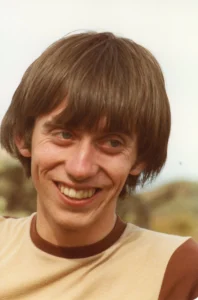 Now that he’s nearing the end of his long career, Alan looks back on the last five decades with no regrets... not even his decision not to pursue a career in the railways, which, incredibly, was determined by the fact that he didn’t meet the minimum weight requirement to qualify for the role as a train driver.
“One part of me says, ‘Yeah, I would’ve liked to join the railways,’ but the other part says, ‘Well, if you were working in the railways all the time then it wouldn’t be a hobby anymore’.”
It’s a glass-half-full attitude that has served Alan well over the decades, and which he encourages other finance workers to adopt.
“The thing is, when you’re at school, does anyone ever say they want to be a banker? No, most people have loftier ambitions.
“But having been a banker all my life, I can look back and see that it has been worthwhile and satisfying and enabled me to achieve more than I could have dreamed of. Helping people has always been a passion of mine and has been with me throughout my career.
“Most of the colleagues I have worked with are very nice, kind and tolerant.
“I think it’s a good industry where we are at the pointy end of diversity and acceptance of differences, and I feel very fortunate.”
“When you work for an employer, does that mean you have to give…

We’ve secured a significant win at Teachers Mutual Bank, which will ensure your…
Ending violence against women and children in Australia is a national responsibility.