
Since 2021, the FSU has been at the forefront of advocating for workplace policies that support those affected by menopause and menstruation and breaking the stigma surrounding it. This vital work ensures that workers experiencing debilitating symptoms have access to paid leave, enabling them to balance their health with work commitments.
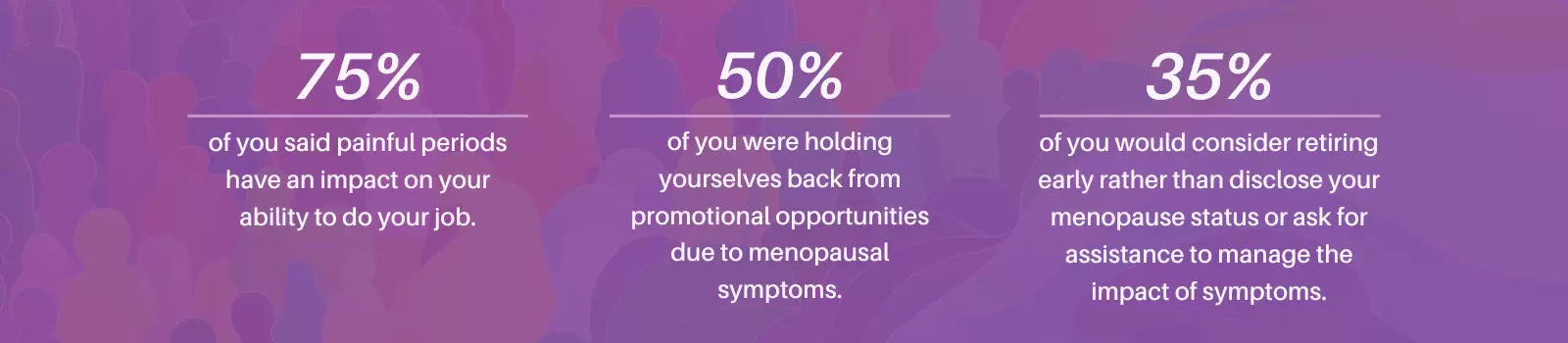
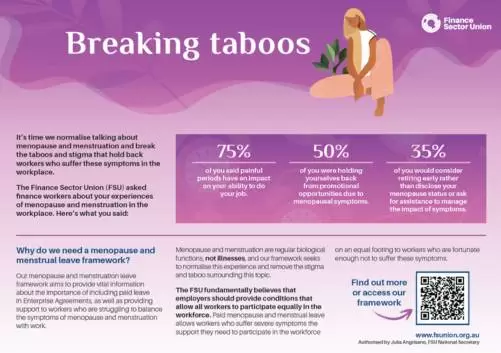
Menopause and menstruation are normal biological functions, not illnesses. Yet, many workers face challenges managing their symptoms while also meeting workplace expectations. An Australian first survey conducted by the FSU in 2023-24 revealed that 35% of finance workers would consider retiring early rather than disclose their menopausal status, and 52% were holding themselves back from promotion opportunities due to these symptoms. These insights formed the basis of our Menopause and menstrual leave framework, developed to provide workers and employers with resources for supporting those affected.
Our framework is built on data gathered from finance workers in the UK and Australia. It includes:

For too long, the stigma surrounding menstruation and menopause has prevented open discussions in the workplace. This silence negatively affects workers’ self-confidence and productivity. By normalising these experiences, we can eliminate the taboo and create a more inclusive work environment. Employers that adopt this policy will benefit from improved retention, productivity, and a stronger commitment to diversity.
Thanks to the FSU's advocacy, workplaces in the finance sector have begun adopting menopause and menstruation policies and frameworks, improving access to flexible work and paid leave since the publication of the framework's 2021 edition. Organisations implementing these policies include CBUS, HESTA, Police Bank, Aware Super, and NAB.
The FSU believes that employers should provide conditions allowing all workers to participate equally in the workforce. Paid menopause and menstrual leave is a step towards achieving this goal and ensuring that no worker is left behind due to the impact of these regular biological functions.

It’s unlikely people will exploit this policy. Menopause and menstruation carry significant social stigma, making workers hesitant to use this type of leave unless absolutely necessary. Like other leave policies, this framework is subject to the same standards. If misuse occurs, it’s often a reflection of broader cultural issues within the workplace, not the leave policy itself
While workers can use sick leave, menopause and menstruation are not illnesses but regular biological processes. Workers should not need to justify their discomfort with a doctor’s note every time. Many workers already deplete their sick leave to manage these symptoms, leaving them without sick days for actual illness or other responsibilities. A dedicated framework recognises this reality and provides appropriate support.
Providing support for natural biological processes is an equity issue, not unfair treatment. Menopause and menstruation can significantly impact workers, and asking them to conceal or manage these symptoms without support is unjust. This framework ensures that workers receive the same consideration as those dealing with other health needs, helping to create a fairer, more inclusive workplace.
This submission from the FSU highlights the significant impact that menopause and perimenopause have on workers in the finance industry. It discusses the physical and mental symptoms experienced by employees and how the lack of workplace awareness exacerbates issues like the gender pay gap and early retirement.
Smashing the gender pay gap - Interactive workplace poster
Smashing the gender pay gap - Workplace game - (instructions)
Impact of long term absence on the gender pay gap
State of play: Paid parental leave
Equal Pay Day - Frequently Asked Questions
Quick Facts: Starting the conversation on pay secrecy
Workplace Gender Equality Agency (WGEA) - Gender Pay Gap Data
Equal Pay Day 2023 information and explainer
FSU submission: Workplace Gender Equality Amendment (Setting Gender Equity Targets) Bill 2024
Recording: Inquiry into Workplace Gender Equality Amendment Bill 2024 22/1/25 (skip to 11.46)
FSU Report - The Price of Silence
FSU event - IWD 2022: Shining a light on the cost of pay secrecy
Starting the conversation on pay secrecy guide
Why You Should Tell Coworkers Your Salary - Adam Ruins Everything
Further reading:
Harvard Business Review: Can Transparency Laws Fix the Gender Wage Gap?
Women's Agenda: Pay Secrecy Feeds Pay Gaps. Transparency Can Change That.
Time: Should You Share Your Salary With Co-Workers? Here’s What Experts Say
Forbes: Pay Transparency Is The Solution To The Pay Gap: Here's One Company's Success Story
PayScale: What Is Pay Transparency & Why Does It Matter?
National Bureau of Economic Research: Do Firms Respond to Gender Pay Gap Transparency?
Breaking taboos: Menopause and menstrual leave policy framework
Online recording: How the Finance Sector Union are leading the menopause conversation
Here's why inclusive workplaces need menopause support (womensagenda.com.au)
Menopause policies are being adopted in workplaces. Is Australia ready for the change? (ABC News)
Driving the change: Menopause and the workplace (Circle-In)
Menopause remains taboo in most workplaces. This needs to change (The Guardian)
Content will show on frontend.



|
If AMP isn’t going to come to the table to negotiate our conditions with us, then we’ll need to force them. And we will do that by securing a majority support determination (MSD). That sounds complicated, but all it means is that a majority of people working at AMP (or in a particular business area of AMP) vote to say they want to bargain – then AMP is legally obligated to negotiate. Of course, there are some legal hoops we need to jump through, but right now the most important thing you can do is click here to join us. Now is the time to get as many of our colleagues involved and engaged in our campaign as possible. |