
1 June 2026
The latest from Union Shopper – June 2026
Union Shopper helps you to make the most of your FSU membership with…

It’s not often you come across a high-up manager in one of the big four banks who has also built their career alongside being a loud and proud union activist. After all, the widespread myth that union activism can be a handbrake on one’s career progression suggests that the two just don’t go together.
But as FSU member Paul Ferrari demonstrates, it doesn’t have to be one or the other.
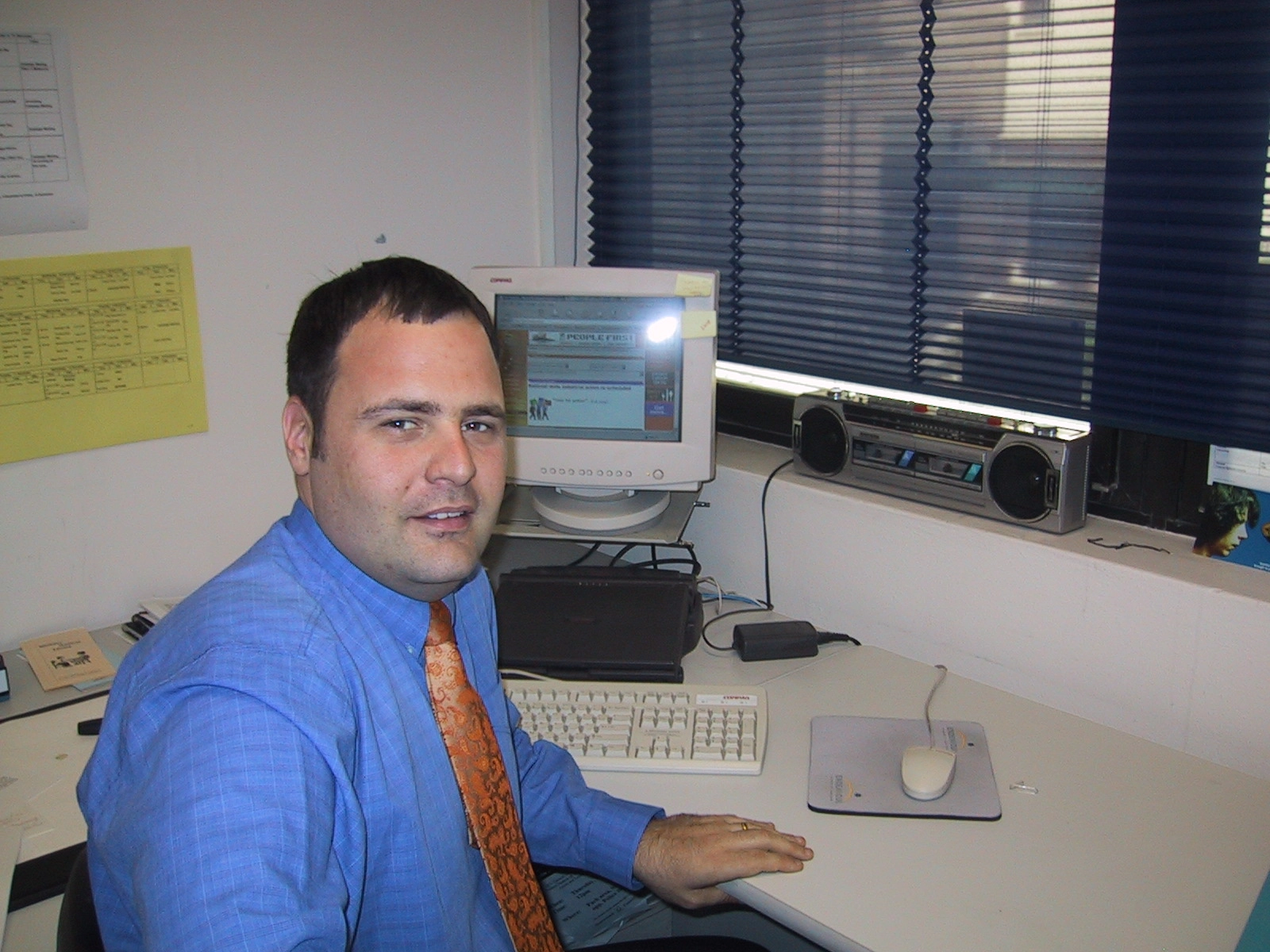
He’s worked at NAB for about 30 years, starting as a teller and gradually working his way up to a Head of Audit role, where he has been for the last four and a half years.
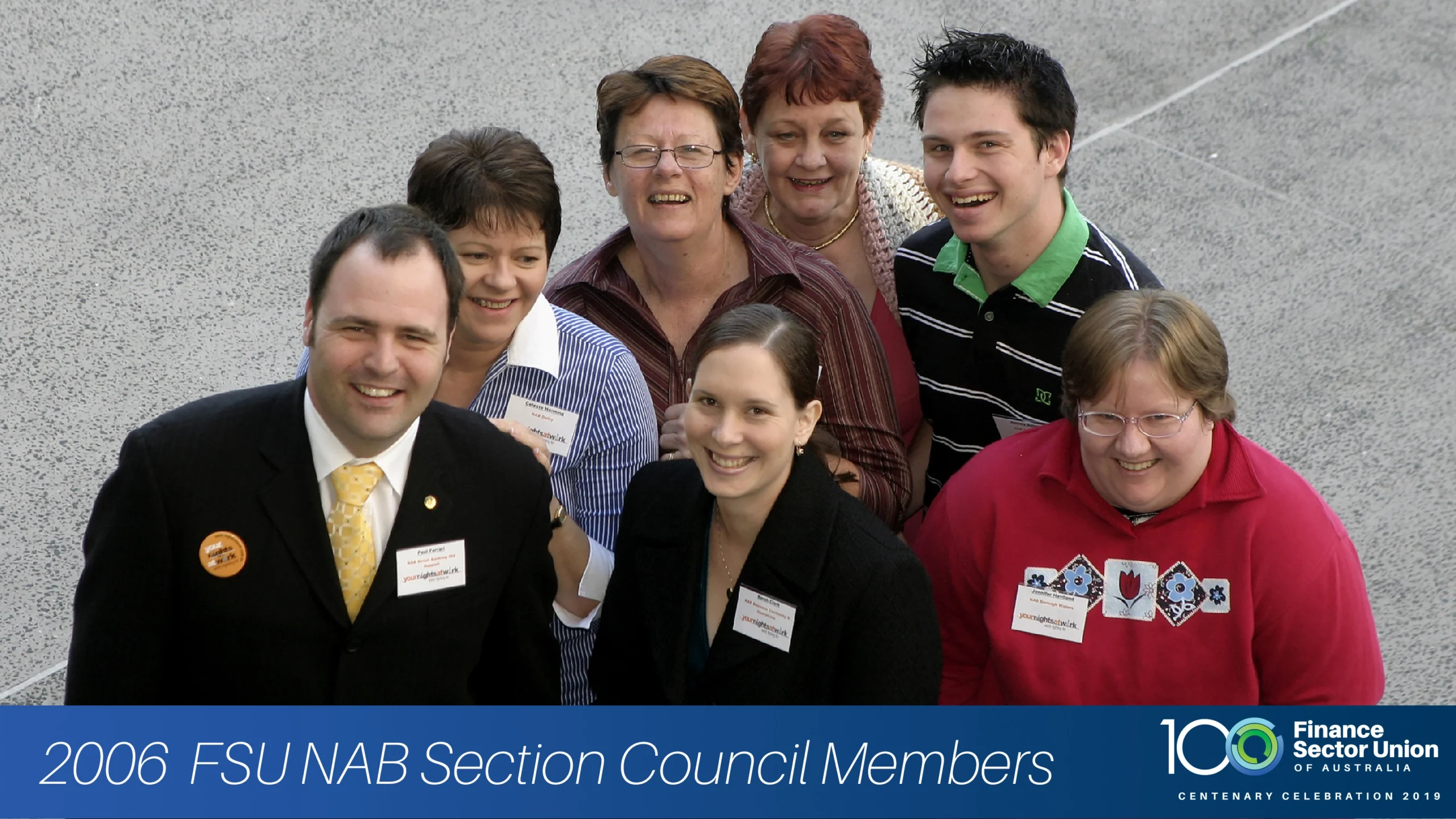
During his career, he’s also been a passionate member of the FSU. In fact, he’s served in some of the most senior roles within our union, including as a member of our national executive and a short stint as National President.
It’s a unique journey – though Paul insists it’s nothing more than a balancing act, along with a determination to do his job to the best of his ability while demonstrating strong ethics and professionalism.
“I remember hearing from a union rep in my early years at NAB that the most successful union reps and activists are also the most successful people in the workplace,” said Paul.
He admits that there have been some raised eyebrows and questions from leaders over the years, though his dedication to the union movement has never hindered his career progression at NAB.
“There have been times when leaders questioned where my loyalties were, yet the behaviours I demonstrated were more important to them, and they could see I had an ethical boundary.
“It took a while, but when I became a senior manager at NAB I felt more comfortable in myself and I knew what I was good at and what the challenges were.
“My profile was there and people were still comfortable talking with me because they could see my professionalism at all times.”
Key to Paul’s success is an emphasis on building consensus – a quality that has served him well in both his professional career and his role as a unionist.
“The way you get decisions made is working out how to get enough people to agree with you that you don’t need to have the debate, people can see it’s a good decision,” he said.
“I’m also a great believer in corridor chats. I make myself visible in the building as much as possible. I run into people and they tell me stuff that they would never say in meetings.
“That’s what I found with my union role too. People don't always want to go down a formal path, sometimes they’d rather use you as a sounding board. That creates some challenges, but it also helps people feel comfortable and build trust.”
'Backing myself to give things a go’
Paul’s ambition was never to climb the corporate ladder. In fact, he often wonders how he ended up as a Head of Audit, given he barely scraped through year 12 and didn’t go to university. It was his experience working in retail that led him to try his hand as a bank teller.
“That’s the thing I’m most proud of: taking opportunities as they came up and backing myself to give things a go.”
What he lacked in academic credentials was more than compensated with his people skills and a passion for helping others. It was this passion that saw him through his first six years of working in various branches before moving into the training division.
“I enjoyed learning something, mastering it, then helping people do that as well,” Paul said.
“I still hear from people who went through the training, and it’s a rewarding thing to know that you played an important part in someone’s career.
“Trade unionism is similar in that it’s people-focused.”
Having joined the Australian Labor Party in the late 80s, Paul’s decision to get involved in the union movement was more deliberate.
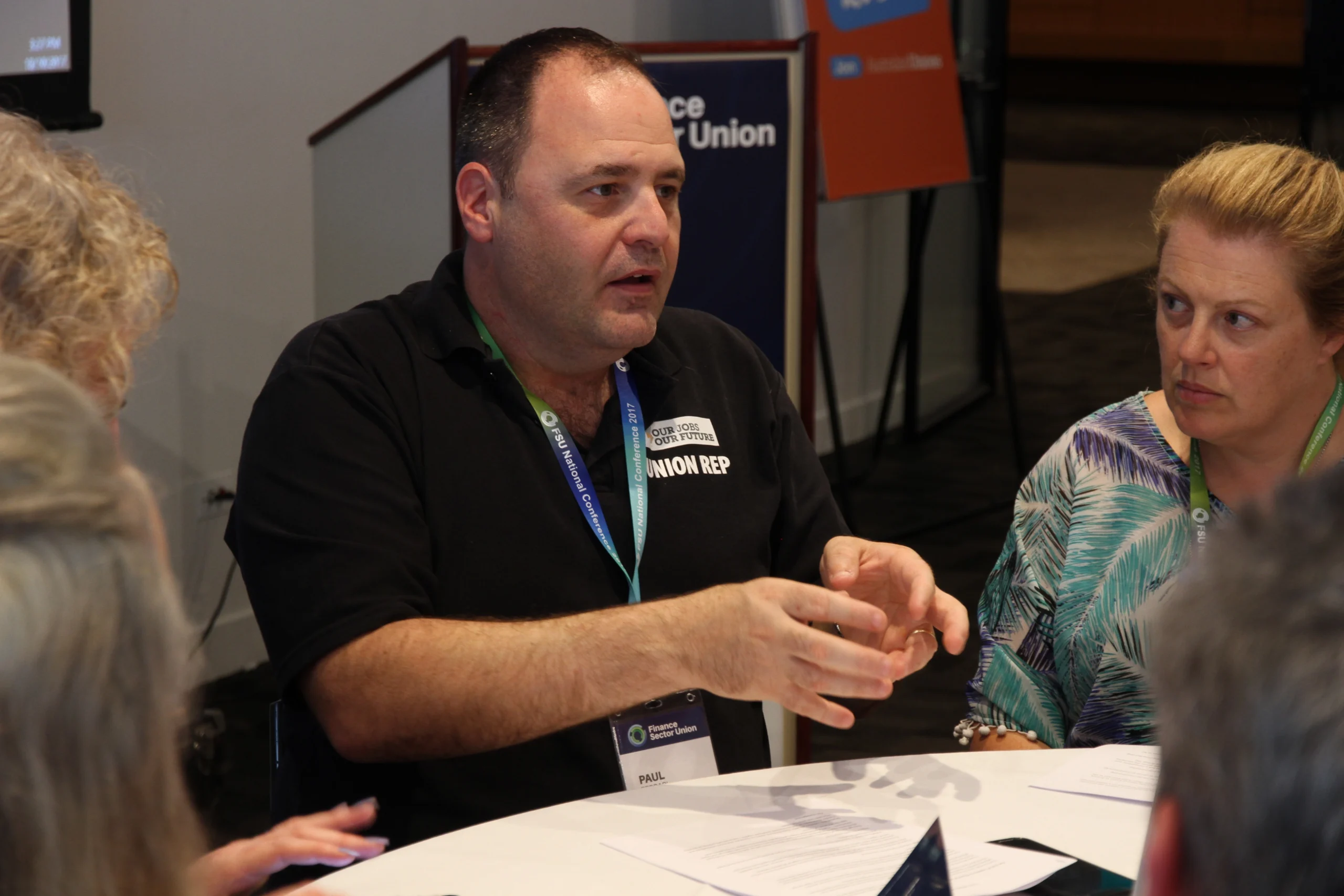
“Although I joined soon after starting at NAB, I got involved in a dispute around staffing at one if the busiest branches in Brisbane. This was where I really cut my teeth!” he explained.
“At the time, our area manager was saying we didn’t have any staffing or workload problems, to which I replied, ‘Then why are we all here until 7pm every night?’”
He later became a workplace representative and joined the Reps Council.
“I just got more and more involved. It’s like a wormhole – it sucks you in and takes you where it takes you.”
A lesson in using his voice
A few years later, Paul learned the power of ordinary workers using their own voices to push back against questionable management decisions.
He recalled NAB deciding in the early 2000s to cut employees’ shares, following the foreign exchange currency scandal. Like today, each employee received shares worth about $1000.
“The people working on the frontline supporting customers felt like we were being punished because of the toxic workplace culture that management had created, which had ultimately led to the scandal,” Paul said.
“At the time I was travelling around training people, and I got a call from the FSU’s National Assistant Secretary who said we were doing a ‘fax back’. That’s where every fax that comes through is forwarded to the Australian CEO’s office.
“We ended up with thousands of them, to the point where the FSU was getting calls from NAB to say that the bank’s fax machine had sh*t itself.”
Paul later accompanied FSU officials to a meeting with the Australian CEO, where he delivered two boxes full of every fax that had been sent.
“He was going off at the union officials in the room and telling them they didn’t understand how the bank worked.
“Then I spoke up and the CEO looked at me and said, ‘Who are you?’ I introduced myself as a training officer who’d been with the bank for almost 10 years.
“The CEO stopped talking. He couldn’t respond to me in the way he was talking to the union people.
“So they immediately gave everyone $500 worth of shares, and they reinstated the $1000 the following year.
“From then on, whenever I went to a meeting where I was representing members, I made sure to wear my NAB badge or lanyard so they knew they were talking to their own people.”
There have been countless disputes like that over the years. More often than not, however, success comes down to workers being prepared to speak up and use their voices.
It’s one of the reasons Paul advises workers to master their role.
“If you come from a position of competence, you have a brand that says you’re good at your job, and you can identify all the ways people are being made to work longer, harder and under more stressful environments.
“That makes the argument a lot easier to win.”
Serving the people, not the economy
Of course, using our voice can be easier said than done. Paul believes this is partly due to issues around job security, which he thinks is the biggest challenge facing finance workers today, just as it was 30 years ago.
“That includes both your ability to get a job and have a job that is both meaningful and financially and mentally rewarding,” Paul said.
He believes that, for too long, the scales have been tipped against workers, thanks to a majority of the past 30 years being ruled by conservative governments.
“So many business leaders in that time have either passed a blind eye or enabled companies to do as they wish – whether it’s on industrial relations or their social licence. That takes a lot of time to turn around.
"But now, even with a progressive government in Canberra, FSU members and activists still need to push for their employers to invest more in their people and the wider community, and for government to improve working rights and standards.”
It’s the sort of structural change that can only come from real grassroots political pressure – and having a strong and visible union movement is the best place to start.
“Getting active in your union is the first step to creating the change you want to see at work,” said Paul.
“If you’re not a member, you don’t have a seat at that table.
“I’ve been involved in many EA campaigns, and there are always a lot of people who aren’t members but they’re very good at throwing rocks and having a crack at the union while not contributing to making their workplaces better for them, their workmates and future finance workers.
“And often when they join, they think of it as like car insurance, but it’s not about that. It’s about being part of a community that helps make your working life better, not just for you but for your workmates.”
Union Shopper helps you to make the most of your FSU membership with…

In a win for workers around the world, the UN’s International Court of…
Convicted child sex abusers will no longer be able to hide their assets…