22 May 2026
All in for this year’s reconciliation week – our role and individual responsibility
During this year’s National Sorry Day (26 May) and Reconciliation Week (27 May…

This upcoming NAIDOC Week (5 – 12 July), the union movement is continuing to push for fairer workplaces that respect and support First Nations Australians. Unions, including the FSU, are calling on the Federal Government to embed cultural and kinship leave in the National Employment Standards (NES).
Aboriginal and Torres Strait Islander peoples have extended family and kinship bonds and obligations, but these are currently not recognised in the Fair Work Act.
In Aboriginal and Torres Strait Islander communities, caring can and does occur outside the current definition of ‘immediate family’, as it relates to such leave entitlements as personal and carer’s leave and compassionate leave.
FSU member and First Nations Finance Workers Committee member Rina Abbott-Jard said updating the NES to include kinship leave was about respecting the added responsibilities that First Nations workers face, while extending benefit to their communities.
“It's about recognising the extension of our responsibilities to our families to include not just immediate family members, but to think a little bit more about the responsibilities that we have to our grandparents, nieces and nephews and different bloodlines within our Community,” said Rina.
“Cultural leave, on the other hand, is about covering our responsibilities that we have to our Community specific to our roles in family to care for and preserve Country, Community and Culture.
“This might specifically include initiation, passing on language, country and land care, looking after our community if someone passes on and following the bereavement processes.
“It might also cover advocacy and campaigning for human rights within our community, supporting people to navigate institutions such as the justice system.”
Rina said providing space for Aboriginal and Torres Strait Islander people to engage with cultural learning and providing cultural safety ultimately improved levels of engagement and the quality of workplaces by lifting the standards for everybody.
“A lot of the activities and things that we participate in as a part of cultural leave actually help us maintain Culture, look after Country, and it also helps us form the national identity that we're really proud of in Australia.”
If you’re keen to celebrate First Nations culture, then NAIDOC Week (5 – 12 July) is the perfect time of year to do just that. What started out as an act of resistance has now become a major season of celebration that all Australians are invited to join.
The theme of this year’s NAIDOC Week is ‘50 Years of Deadly’.
“The word ‘deadly’ actually means the opposite of what we think the word means,” Rina explained.
“Whenever I hear, ‘Oh that's deadly’, it fills me with joy. It’s a way of saying something’s really positive in the Community.
“The thing that’s really lovely is that the rest of Australia is coming with us – they’re starting to tap into how we communicate differently with each other and the nuances and the different levels of meaning that are attached to different words.”
Rina said that, whether it’s attending a family fun day, going to the theatre to watch an Indigenous production, or buying books by First Nations authors, there are countless ways to celebrate NAIDOC Week.
There are also many opportunities offered by employers with Reconciliation commitments. The Reconciliation Australia website shows local listings of events and activities.
“If you’re a colleague of someone who is First Nations and they take on a lot of extra work during the season, just be kind and try not to put too much in the calendar so that there’s enough room to really enjoy NAIDOC Week and the celebrations that go with it.”
During this year’s National Sorry Day (26 May) and Reconciliation Week (27 May…
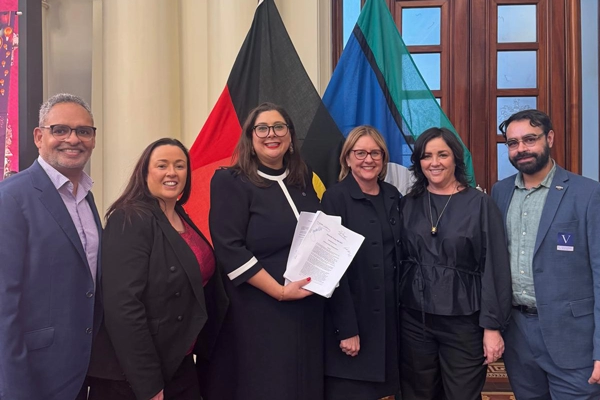
Victoria has become the first Australian state or territory to legislate a Treaty…

National NAIDOC Week celebrations are held across Australia in the first week of…