
17 September 2026
Op-ed by ACTU Secretary Melissa Donnelly: AI tech pioneers’ fears of AI beyond human control show it is past time for an effective regulator
One of the hardest challenges of Artificial Intelligence is to sort fact from…

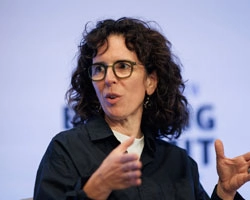 The human impact of AI was front and centre at a recent banking summit, with our very own National Secretary Julia Angrisano representing finance workers nationwide by calling on banks and other employers to lift their game when it comes to consultation and providing reskilling opportunities for workers.
The Australian Financial Review’s Banking Summit, which was themed around the ‘great upheaval’, saw decision makers, worker representatives, CEOs and other leaders come together to discuss, among other things, the rise of AI and how it is reshaping the value of our work and skills.
In a panel discussion, Julia provided vital insights into the lived experiences of finance workers, and how we are responding to what she described as “a big structural reset of the workforce”.
“If we just think about AI as a productivity tool and forget about the fact that there’s a customer on the other side of that transaction [...] and that there’s good judgment, accountability and empathy in those interactions, then we could lose sight of what we’re trying to do here,” said Julia.
“Equally, staff are really nervous right now about their future. They remain skeptical about what all this is going to mean for them,” Julia said, referring to a recent FSU survey that showed 60% of workers were feeling unprepared for the AI future.
“So if you're feeling unprepared but at the same time you know that tools are being deployed in the background and they’re going to come into your area and you’re not ready to use them, then you’re going to feel like you’re the first one that might be let go.”
Under Australian law, employers already have a legal obligation to consult with workers when they decide to implement changes that will impact employees’ jobs. That obligation extends to AI.
However, Julia said a fundamental rethink was needed regarding the way employers engage and consult with their workers.
“That old-fashioned industrial approach to change is no longer fit for purpose when we’re seeing the pace and scale of change coming through,” said Julia.
“The FSU is already engaging with many employers around what better transparency looks like – actually having a conversation with the workforce that says, here’s the technology we’re thinking of deploying, this is what the change may look like, and starting to have a very early conversation with workers about the impact that technology will have on them so that ultimately we can be better prepared for change.”
While AI will undoubtably bring disruption to our industry (and some of that disruption is already happening), we are not yet seeing broad displacements of the workforce due to AI.
Co-panelist and Head of Customer Advisory at SAP Business Suite Peter Solowy said AI provides unprecedented opportunities for organisations to unlock workers’ skills that they didn’t realise they already had.
“When you look at historical HR information systems, they looked at employee capability through the lens of things like your job description, your org chart, your performance appraisal, essentially what you are hired to do and not what you’re capable of,” said Paul.
“AI now has the ability to start to infer skills within your organisation through multiple signals.”
These signals include your uploaded resume, your work achievements, and your adjacent skills.
“This is an opportunity for organisations and banks to look at the workforce they already have and uncover skills and productivity that they didn't even realise they had and keep up with the pace of change with AI.
“So we don't see this as a reduction in the workforce but rather a productivity gain and looking at a reskilling as well.”
If this is true, then the time to invest in the current workforce to meet future organisational needs is now.
Julia said that means banks must be prepared to invest in and develop their existing workforce – and provide staff the time and space to think about their core capabilities and how they can prepare themselves for the future.
“Banks already employ thousands of people who have a really good understanding of financial systems, of customer behaviour and regulation and risk.
“That’s an incredibly valuable foundation to keep building on.”
The FSU is playing an integral role when it comes to advocating for fair worker protections and better regulation around AI in Australia, both at a government level and directly with employers. You can find out more about our AI campaign and get involved here.
One of the hardest challenges of Artificial Intelligence is to sort fact from…
Unions NSW is conducting an important survey for workers in NSW to find…
To ensure the issues confronting finance workers were front and centre at the…